How to Choose a Food Hall Operator: A Developer's Guide
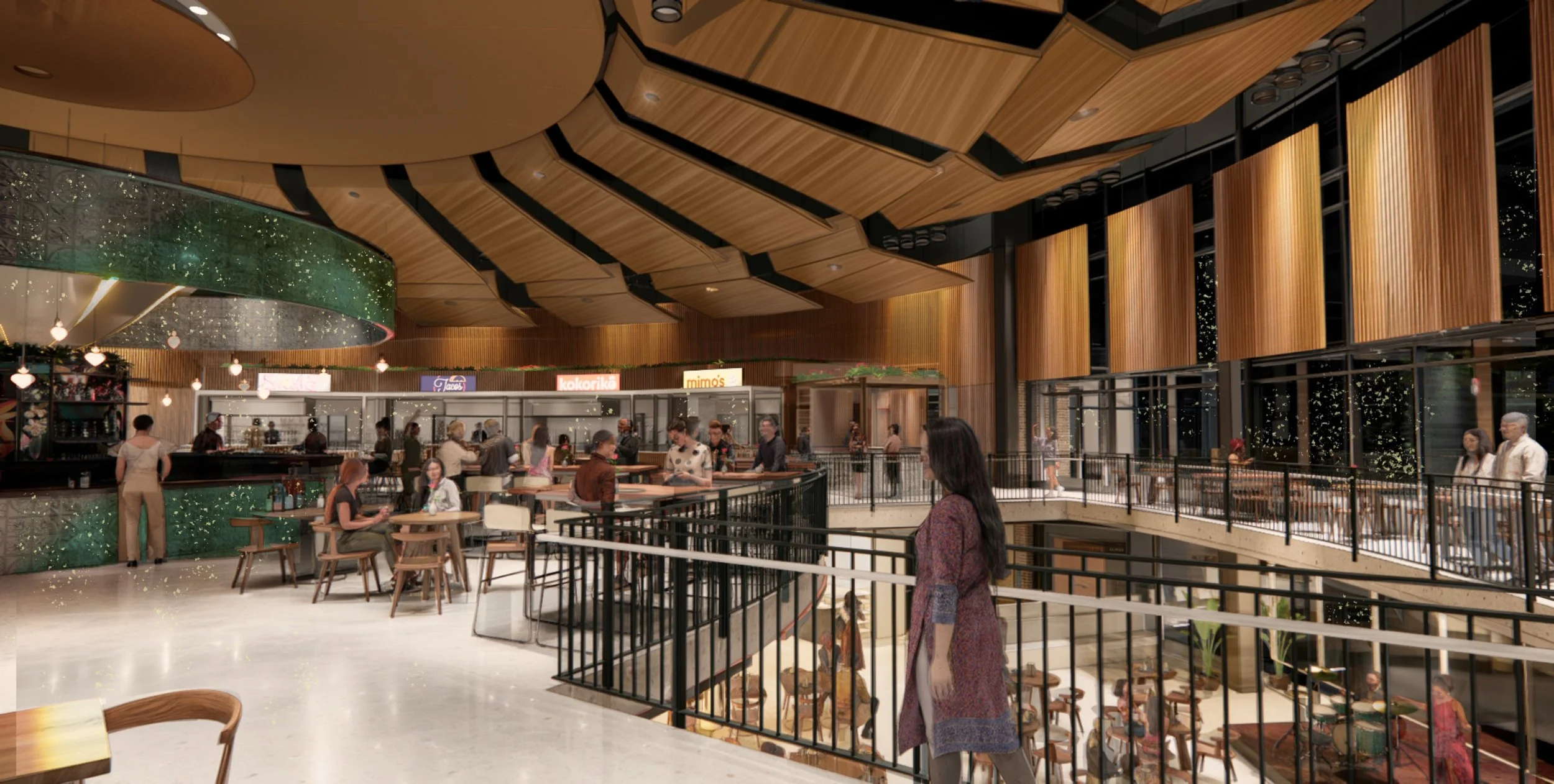
La Villita Food Hall - Coming Soon.
If you are building a food hall in your development, choosing the operator is one of the most critical decisions you can make.
Choose well, and you have an asset that becomes an anchor for the development, is adopted by the community, and provides a platform for local chefs and restaurateurs for many years to come. Choose poorly, and you wind up with a large, expensive, and vacant space that fails to attract repeat business, degrades the surrounding development, and dies a slow, financially draining death.
The fact is that a Food Hall is an extremely challenging business filled with exponential complexity, an insatiable need for ongoing oversight, constant change, and new and exciting activation to remain relevant. These businesses are also multi-layered and require the operator to excel at multiple business streams. Today’s food hall operator needs to be an expert at vendor sourcing and curation, group dining and catering, marketing and partnerships, innovative activations, compelling design, modern bar operations, financial expertise, and food and beverage operations. These businesses are NOT the natural extension of a restaurant, or a media company, or a real estate developer – they are a seamless combination of all three.
That’s what makes finding the right operator so difficult.
To help a developer through this process, we have created an easy-to-use eight-question interview guide to finding an operator who can be successful in the space. We have outlined the reason for each question, what to look for in the answer, and how to find a skilled food hall practitioner – and not a group that may be way out of their depth.
If you only do one thing differently in your next operator interview, ask question #1 and listen to how the answer is structured. That single answer will tell you more about the operator than the entire rest of the meeting.
1. How does the food hall actually make money?

Multiple Revenue Streams of a Successful Food Hall
Why this question matters. Most operators answer this question by pointing to vendor commissions. While the vendor commission is the largest single revenue line, it isn't what carries a healthy hall. Halls that lean too heavily on vendor commissions consistently underperform — leaving 25 - 30% of potential revenue completely on the table because the beverage program, events, group dining, programming, and ancillary revenue lines were never built into the operating plan. The way an operator answers this question tells you whether they know that.
Here’s what a great answer sounds like: The operator acknowledges the importance of the vendor commissions and has a concrete number for what they charge a vendor for their services. They should be able to quote a % of total vendor revenue that they forecast and how that is channeled into the food hall operating budget through base rent, common area charges, or a percentage of sales. The vendor commissions should account for between 60-70% of the total food hall revenue collected by the operator. The operator should then be able to quote the contribution from beverage (normally between 18% - 24% of total food hall sales). Finally, listen for the other 6% - 12% of revenue – which could come from group events, advertising, delivery, partnerships, etc… Listen for ancillary revenue streams that feed the bottom line. They name each line and explain how their team activates it. Specific numbers, specific tactics. They mention the lines other operators ignore — sponsorship deals, digital ad sales, brand activation fees, programming-driven lift on bar revenue.
What a poor answer sounds like. "Vendor commissions plus the bar." Or a general claim about "multiple revenue streams" with no specific breakdown. If the operator can't name multiple revenue lines without prompting, they will likely rely solely on the vendors and the bar.
The follow-up that surfaces depth. "What percentage of your current halls' revenue comes from each line, and how has that mix changed over the last 18 months?" A real operator can answer this from memory or with a quick reference. An operator who can't is one who reports to their development partners on aggregate revenue, not on the lines that actually drive performance.
2. What's the marketing plan for the first two years of operation?
Why this question matters. Most operators have a pre-opening PR push and call it a marketing plan. The hall opens, the launch buzz lasts three to six months, and then the marketing engine goes quiet. By month nine, traffic softens, and the operating team blames the trade area instead of the silence in the marketing budget. Halls that maintain traffic past year one are the ones with a continuous and effective marketing program — owned, budgeted, and calendared from the start, not bolted on after the launch buzz fades.
What a great answer sounds like. Four specific things: (1) the operator can name a dedicated resource or staff member who will handle marketing for the food hall, (2) a monthly budget is established that doesn't drop to zero after opening, and (3) the plan includes multiple layers that build on one another including a website, social media plan, SEO strategy and targeted advertising (4) the operator should have a solid 18-24 month mapped to specific dayparts and revenue lines. They talk about social media as a real channel, SEO, local partnerships, ongoing PR, paid digital, email marketing, and the cadence each one runs on.
What a poor answer sounds like. "We'll have a big PR push at opening." Or "we'll figure out the year-two plan once we see how the hall is performing." Both translate to: marketing is overhead they cut first when the budget tightens, which is exactly when marketing matters most.
The follow-up that surfaces depth. "What's the line item for marketing in your monthly operating budget at the halls you currently run, as a percentage of revenue?" An operator who can't answer this within a one-point range is an operator whose marketing budget doesn't exist as a real line.
3. What's your catering, off-premise, and group dining strategy?

Catering & Off-Premise ordering
Why this question matters. Catering, off-premise, and group dining (corporate dinners, brand activations, large reservations, box lunches, ticketed dinners) can be 6 to 12 percent of gross revenue at well-run halls — and zero percent at halls where the operating team waits to "see how it develops." This is one of the highest-margin revenue lines in a food hall because it uses infrastructure that's already paid for (the bar, the kitchens, the space) with incremental labor only. The operators who hit the upper end of the range built the muscle from day one. The operators who hit zero never built the sales or operating process.
What a great answer sounds like. The operator names the infrastructure (catering kitchen, prep capacity, booking platform), the sales process (who's responsible for outbound, how leads are sourced, what the target mix looks like), and the integration with vendor operations (how catering orders flow through vendor kitchens without disrupting walk-in service). They have a target percentage of revenue, and they can describe how they hit it. Finally, they are able to list out ancillary charges and fees that flow directly to the bottom line – like room rentals, AV upcharges, admin fees, etc… (These are all incredible profit enhancers).
What a poor answer sounds like. "We'll see how it develops." Or "the vendors can handle their own catering." Or "we'll add it later if there's demand." All three mean: there is no catering line, and there won't be one.
The follow-up that surfaces depth. "Walk me through a typical week of group-dining bookings at your top-performing hall — who books it, what's the lead time, what kind of events are booked, and what's the average ticket size?" If the operator can describe this from operating experience, they have the muscle. If the answer becomes vague, they don't.
4. How does your beverage program adapt to declining liquor consumption?
Why this question matters. The food hall bar program — historically 25- 30 percent of revenue — is experiencing real generational erosion. Younger generations are drinking measurably less alcohol than the generations before them, and the operators still running 2018's bar playbook (beer, wine, spirits, done) are watching their beverage line soften without understanding why. The operators who maintain beverage revenue are reframing the bar as a beverage program — and the question separates operators who are watching the category from operators who are running yesterday's model.
What a great answer sounds like. The operator references the generational shift directly. They talk about non-alcoholic cocktails, NA beer and wine that's now genuinely good, functional and adaptogenic drinks, premium coffee and tea, house sodas, and the price architecture that keeps revenue per pour stable as the mix shifts. They understand that a thoughtfully built mocktail at $14 makes about the same margins as a $14 alcoholic cocktail once you factor in premium NA spirits and house-made ingredients.
What a poor answer sounds like. "We have a great cocktail program." Or "we'll add some non-alcoholic options to the menu." Both miss the seismic market shift — the program needs to be designed around the new consumption pattern, not patched to acknowledge it.
The follow-up that surfaces depth. "What categories within your beverage program are growing vs. 18 – 24 months ago." An operator who's serious about this question is tracking it. An operator who isn't will answer with a guess.
5. How do you handle vendor turnover?
Why this question matters: Underperforming vendors — or vendors who leave suddenly — can be a silent killer of food hall economics. Every operator’s leases will eventually fail somewhere: vendors fail, vendors outgrow the hall, or vendors stop fitting the curation as the market shifts.
The operators who handle this well run a continuous recruiting pipeline regardless of current occupancy. The operators who handle it poorly wait until a stall goes dark, then scramble to replace the vendor under deadline pressure, which usually produces a bad fit.
A dark stall in your food hall is a multi-month revenue leak and a guest-experience problem that makes the rest of the hall look worse.
What a great answer sounds like. The operator describes performance triggers in the lease (quality, oversight, cleanliness, revenue), a structured improvement window before a planned exit, and a curated bench of two to three replacements being actively maintained at all times. They name the categories where they have replacement candidates ready to go. They treat vendor turnover as a continuous program, not a reactive event.
In addition, savvy operators build in aggressive termination rights for the hall so that an underperforming vendor is not allowed to linger for months after the concept has clearly failed. Beware long vendor agreement terms.
What a poor answer sounds like. “We work closely with our vendors to make sure they succeed.” Translation: there’s no real performance trigger, no structured exit process, and no replacement pipeline. When the first vendor fails, the operator will spend three months scrambling.
The follow-up that surfaces depth. "When was the last vendor you transitioned out, what was the timeline from first concern to replacement open, and what triggered the exit?" An operator with discipline has a specific answer. An operator without discipline has a vague one.
6. How does your operations plan change over the first two years of the business?

Adjusting the Operations plan to Evolve with the Business
Why this question matters. Year one in a food hall is the hardest — it's the exploratory year where the trade area teaches you lessons the feasibility study couldn't, vendors find their stride or fail, daypart rhythms come into focus, and the launch surprises get expensive. Year two is the foundational year, when the hall stabilizes, and refinement becomes possible. Year three is when compounding shows up. An operator who hasn't separately planned for year one and year two will treat stabilization as a destination rather than a foundation — and the hall will plateau.
What a great answer sounds like. The operator distinguishes the two years explicitly. Year one is described in terms of required capital reserves, vendor monitoring, launch-surprise contingency, and patience during the exploratory phase. Year two is described in terms of specific refinement priorities — sharpening the beverage program, scaling the events calendar, tightening labor against actual demand, scaling the programming that drove footfall. The plans are different because the years are different.
What a poor answer sounds like. A single combined "first two years" plan that doesn't distinguish the exploratory and stabilization phases. Or a year-one plan with a year-two appendix that's mostly "we'll keep doing what's working." The lack of distinction tells you the operator hasn't actually been through enough hall openings to know the cycle.
The follow-up that surfaces depth. "What capital reserve do you typically recommend for the year-one operating period, and what does that fund?" The honest answer is three to six months of operating reserve. An operator who can articulate this clearly has thought about year one as its own phase. Another strong probe for an operator is A strong food hall operator should have specific, defensible positions on design decisions — not just deference to the architect. If they can articulate their own principles on sizing, seating ratios, cold vs hot kitchens, and vendor branding discipline, they're going to be a better partner. Our food hall design principles walk through the specific decisions we bring to every project.
7. What's your OPEX (Operating Expense) target as a percentage of gross revenue, and how do you hold it?
Why this question matters.Operating expenses, inclusive of labor, typically run 28 to 32 percent of gross revenue at a healthy food hall. The number doesn't compress easily, and the largest line labor tends to creep during non-peak windows when nobody is watching it closely. Operators who keep OPEX within the target range have a real labor management process. The operators who don't end up at 35 to 40 percent OPEX, which collapses EBITDA from the healthy 8 to 12 percent range into single digits.
What a great answer sounds like. The operator answers within a 2- to 3-point range without flinching. They describe a labor management process specifically — a daily or weekly labor-to-revenue dashboard, scheduling tuned to actual daypart traffic, and manager accountability for the labor line. Labor is included in the OPEX number, not adjacent to it. They acknowledge that holding the number takes constant attention, not occasional spreadsheets.
What a poor answer sounds like. A vague claim about "tight financial controls." Or an OPEX number that sounds too good (under 25 percent) — which usually means they're excluding labor, missing large swaths of expenses, or carving out certain expenses to make the number look better. The most common red flag here is an operator who quotes a low number with confidence; either they're excluding things, or they don't actually hold the number in practice.
The follow-up that surfaces depth. "What's the labor-to-gross-revenue ratio at your top-performing hall, and how often do you review it?" An operator with discipline reviews labor weekly and can quote the ratio from memory. An operator without discipline reviews labor monthly when the P&L comes out, by which point the month is already lost.
8. What's your fee structure, and what aligns your incentives with ours?
Why this question matters. Most management agreements combine a base management fee with a performance incentive tied to NOI or EBITDA above a threshold. The structure matters less than whether the performance incentive is meaningful enough to actually drive the operator's behavior. If the base fee is large and the incentive is small, the operator is paid to show up, not to perform. If the structure includes equity stakes or master lease arrangements, the operator's incentives can shift in ways that don't always serve the owner.
What a great answer sounds like. The operator can describe the fee structure plainly, name the typical base fee range (often 3 to 6 percent of gross revenue), and describe the performance incentive in specific terms — what's the threshold, what's the share above it, what's the cap. They explain why their structure aligns with the owner's interests and what they specifically don't do (such as taking equity stakes, master leases, or management fees before the owner's rent obligation is satisfied).
What a poor answer sounds like. A fee structure that requires a complicated explanation. Or a performance incentive that's nominally there but structured so it almost never triggers. Or a base fee that's high enough that the operator doesn't really need the performance side. Or an operator who insists on equity participation as a condition of taking the work — that's an incentive misalignment dressed up as commitment.
The follow-up that surfaces depth. "In the operating waterfall, who gets paid first — the owner's rent obligation, the management fee, or vendor payouts?" The right answer is the owner's rent obligation is satisfied first, before any management fees or profit distributions. Operators who answer differently are operators whose structures don't put the owner's interests at the top of the waterfall.

What the answers reveal
No single answer to any of these questions is decisive. What matters is the pattern across all eight.
Operators who answer with specific numbers, processes, and examples have actually run halls — and their answers reflect operating reality, not consulting theory. Operators who answer with general language, conceptual frameworks, and "we'll figure that out" deferrals are operators whose pitch deck is more developed than their operating discipline.
The pattern usually shows up by question four or five. A great operator gives consistent depth across every question. An operator who's pitching beyond their experience gets thinner as the questions get more specific.
The cost of choosing the wrong operator on your first food hall is years of underperformance, vendor turnover you don't have the muscle to manage, and a hall that operates at the lower end of its potential range for the entire holding period. The cost of an additional thirty minutes of interview discipline is dramatically smaller.
What this means for you
If you're underwriting a food hall, build operator selection into the development timeline as a real workstream — not a vendor selection. The right operator is hired in pre-development, not after construction has started. The wrong operator becomes hard to replace once vendor leases are signed and operations are underway.
If you're interviewing operators now, run the eight questions through every candidate. Don't water them down for politeness. The operators who appreciate the rigor are the ones you want; the operators who get defensive are telling you something useful.
If you're early on a project and want a clear-eyed read on whether your operator selection process is set up right — or whether your shortlist of operators is the right shortlist — this is one of the foundations of our Food Hall Consulting Services.
FAQ
-
Plan for 12 to 16 weeks from initial shortlist to signed agreement. The first three to four weeks cover initial outreach and pitch meetings, the next four to eight weeks cover deeper interviews and reference checks, and the final four to eight weeks handle term sheet negotiation and contracting. Compressing this timeline below twelve weeks usually means skipping the depth of interview and reference work that protects against a bad fit.
-
For most developers, yes — at least an informal one. An RFP standardizes the questions you ask each operator and makes the comparison meaningful. It doesn't have to be a 50-page government-style document; a five-page brief with project context, the questions you're asking, and the response format is enough. The discipline of running a structured comparison is what protects you from being charmed into the wrong hire.
-
Three is a good number. Fewer than three and you have no real comparison baseline. More than three and the process drags, you have to wade through unqualified firms, and the operators start to sense you're not serious about hiring anyone. Three strong, well-researched candidates, each run through a consistent interview process, produces the best decision quality.
-
The clearest ones: no tangible past projects, an inability to describe revenue mix as percentages, a fee structure that requires complicated explanation, a refusal to work under a standard management agreement (insistence on master lease or equity instead), an operator who pitches every potential lead the same way regardless of project specifics, and an operator who can't name vendors they've actually worked with by name.
-
Yes – This can be helpful. The right reference list includes someone on the development/ownership side, someone from a past project, and a vendor/tenant of the candidate in one of their food halls. Talking to the former-client reference is where you learn the most. Ask each reference the same question: "What did the operator do well, what did they not do well, and would you hire them again on a new project?"
-
Yes. Management agreements are negotiated documents, not standard forms. The base fee, performance incentive thresholds and percentages, termination clauses, scope of services, and reimbursable expenses are all negotiable. What matters is going into the negotiation with a clear sense of what aligns the operator's incentives with yours — not just what minimizes fees.