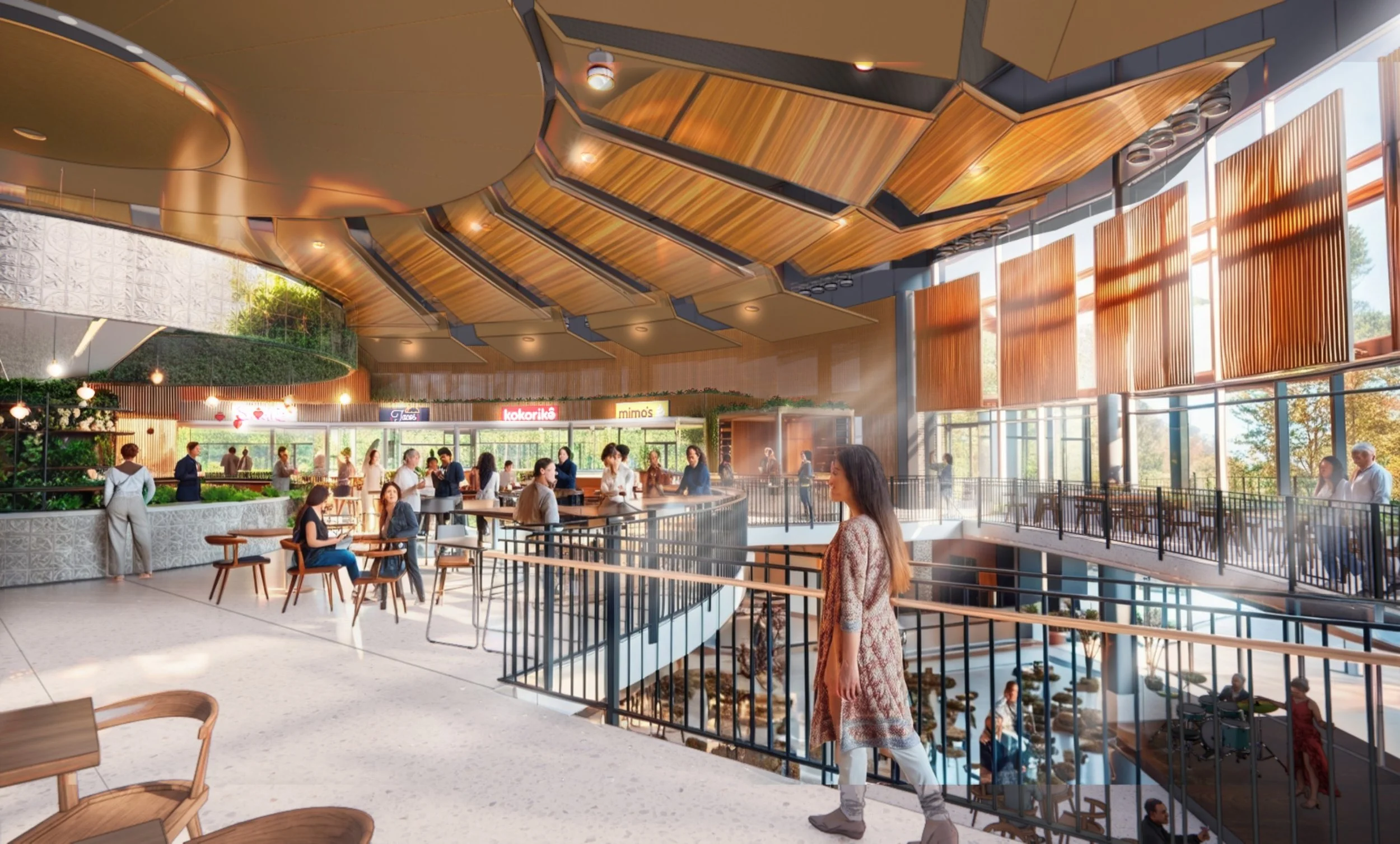
Food Hall Development
Feasibility, design, and launch services for developers building the high-performance food halls of tomorrow.
Whether it's a large-scale gourmet food hall, a neighborhood market, or a multi-concept F&B venue, we dig into current market trends to deliver a program that creates lasting value for our clients. Our data-driven, financially disciplined approach draws on decades of global hospitality and independent restaurant experience to provide a clear, actionable blueprint for strong financial performance and immediate market impact.
Onset Hospitality works with developers, REITs, family offices, and mixed-use owners to set those assumptions correctly before a single drawing is committed — and to carry the project through opening day with a financial and operational plan that holds up in year two. We've developed and advised food halls in primary, secondary, and emerging markets. The work is the same every time: clear-eyed feasibility, a program sized to the trade area, infrastructure planned before finishes are picked, and vendor leases written for the long run.
Our services include:
Market Analysis
Development Strategy Session
Seat counts and spatial requirements
Schematic Layouts with key adjacencies and service paths
Infrastructure requirements
Design Concept and Visioning
Detailed Financial Planning
Pre-Opening Marketing and Digital Strategy
Vendor Curation
Vendor Onboarding
Launch Support
Frequently Asked Questions
-
A food hall operator runs the hall as a single integrated business — daily operations, financial controls, vendor relationships, bar programming, marketing, staffing, and brand management. The job is to deliver a hall-level P&L the owner can underwrite, keep vendor-level economics healthy enough that operators want to stay, and deliver an experience that keeps guests coming back.
-
Under a management agreement, the owner holds the food hall asset and owns the operating entity, and the operator manages the business under a contract that defines scope, fees, performance metrics, and term. Fees typically include a base management fee (a percentage of gross revenue) plus a performance incentive tied to EBITDA. The owner retains all ownership rights and upside; the operator earns based on how well the hall performs against plan.
-
Onset combines best-in-class systems, processes, and infrastructure from food halls around the globe with a focus on incremental revenue streams to deliver food halls that are more exciting, profitable, and sustainable than any other food hall company.
-
Our vendor agreements include explicit performance triggers around quality, operational oversight, cleanliness, and revenue. When a vendor falls below those triggers, the conversation moves from coaching to a structured improvement window to a planned exit — with a curated replacement pipeline already lined up.
-
Operator transitions are a meaningful part of our work. A structured 60-to-90-day transition gets the books, vendors, and operations onto our platform without breaking continuity for guests.